SAR Times Weekly (02 Jul 2026)
⚡️Weekly Highlights
This week on the site: EU Screening Regulation Adds a New Layer After Rescue at Sea looks at what the regulation that took effect June 12 actually changes for SAR coordinators operating on European coasts, and the Monthly Regulatory Meetings for July 2026 is your reference for what's on the calendar this month at IMO, ICAO, and related bodies.
The week's SAR news was dominated by Venezuela. The June 24 doublet earthquakes produced a USAR response that is difficult to describe in operational terms: approximately 50,000 reported missing, nearly 1,800 confirmed deaths, and LA County Fire's USA-2 and Virginia Task Force 1 are still running 24/7 operations in La Guaira as of July 1. Most SAR professionals think in 72-hour windows. Venezuela is a reminder that the question of when to shift from rescue to recovery, and how to sustain pace until that decision is made, is one of the hardest things USAR teams face. The cases section covers the Venezuela operation along with a multi-day Coast Guard search off Oahu that ended in suspension, a National Guard hoist off Mount Washington, an EPIRB activation near Montauk that worked exactly as designed, and a joint technical rescue in Nova Scotia.
Two policy items this week also are worth your time before you get to the cases. The IMO's NCSR 13 (discussed before, this is reminder) subcommittee closed late June with draft amendments that would add two-way communication to EPIRBs via the Galileo Return Link, and a stepwise plan for the analogue-to-digital VHF transition running through 2045. Both need MSC 112 approval in December. The Coast Guard also finalized a rule updating marine casualty reporting for Outer Continental Shelf operations. It's a quiet update, but better data on serious offshore incidents is directly relevant to how SAR resources get committed.
🔴 Cases & Operations
EPIRB Triggers Multi-Agency Recovery Near Montauk
USCG Station Montauk and the Air National Guard recovered a mariner on July 1 after an EPIRB alert placed the distress approximately three miles southwest of Montauk, New York. The case follows the script: beacon activated, registration was current, RCC coordinated air and surface assets, subject was located. A properly registered EPIRB continues to be one of the most reliable tools in maritime SAR, and this is a clean data point for that argument.
USA-2 and USA-1 Conducting Continuous Operations in Venezuela as Missing Count Approaches 50,000
LA County Fire's USA-2, Virginia Task Force 1, and international USAR partners are working around the clock in northern Venezuela following the June 24 doublet earthquakes. Reported deaths have reached 1,790 with approximately 50,000 missing as of June 29. The operation illustrates what prolonged international USAR deployment actually looks like: crew rotation, logistics under infrastructure failure, coordination across multiple task forces in destroyed urban terrain. The teams are past the standard survivor window and still finding people.
Hiker Hoisted From Huntington Ravine After 50-Foot Fall on Mount Washington
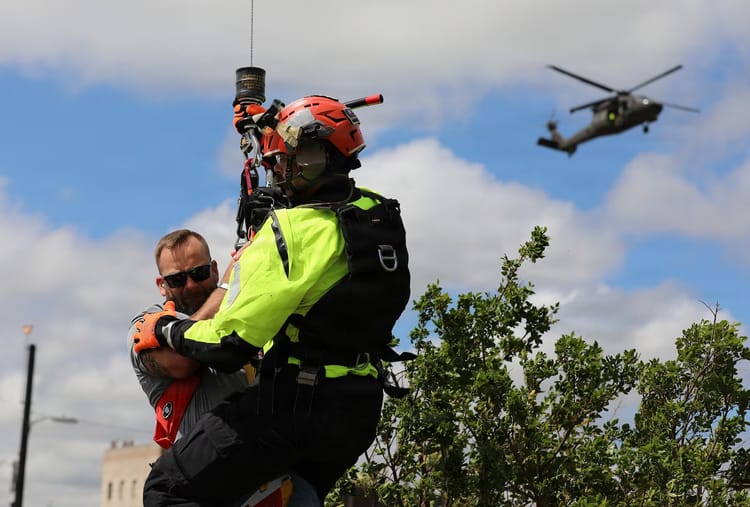
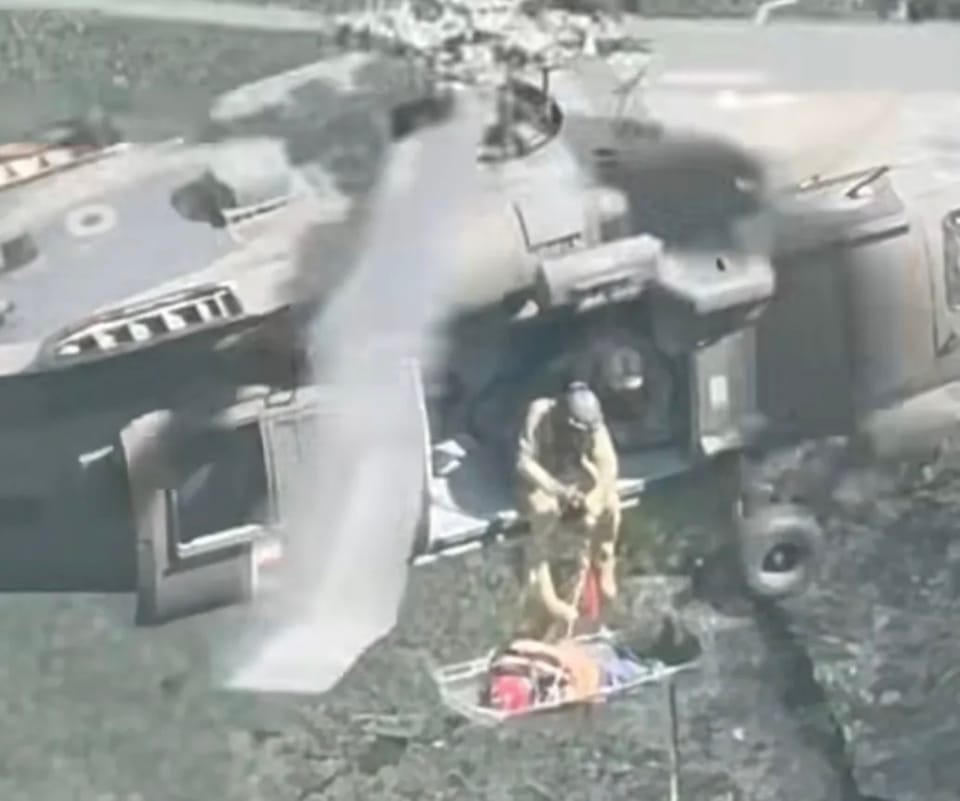
A 24-year-old hiker was evacuated by National Guard helicopter from Huntington Ravine Trail on June 26 after a 50-foot fall caused serious injuries on steep slab terrain. Conservation officers activated technical SAR teams and requested rotary-wing support due to hazardous access. Ground teams approached from above via the Auto Road while a paramedic was hoisted in from the aircraft to package the patient. Mount Washington produces this case type regularly: terrain marketed as hiking that requires exposed climbing technique, with rescue demanding approach from opposite directions simultaneously.
Canadian Mountain Rescue Atlantic Extracts Injured Hiker From Remote Nova Scotia Riverbed
A joint team of local first responders and Canadian Mountain Rescue Atlantic recovered an injured hiker from a remote riverbed near Brooklyn, Nova Scotia after the subject became stranded in difficult-access terrain. The mission combined municipal response with specialized rope and water-access capability. Multi-agency coordination in mixed wilderness and riverine terrain is a skill set that requires deliberate exercise, and this is a case where having the right specialty team available made the difference.
Coast Guard Suspends Search Off Oahu After Multi-Day Operation
USCG District 14 suspended its search off Oahu for a missing father and son at 19:17 local on June 27, following joint air and surface operations that started near Hanauma Bay on June 24. Multi-day searches in challenging nearshore conditions place enormous pressure on RCC decision-making. The suspension call, when probability of survival has dropped to where continued effort cannot change the expected outcome, is among the hardest calls a coordinator makes and one the public rarely understands. This case ran four days before that decision was reached.
Looking for a way to standardize your team's Search and Rescue certifications? Join the International Association of Search and Rescue Coordinators as an organization and have a voice in setting international SAR standards.
Individual Memberships are nearly here, too!
📡 Technology & Innovation
Rocket Lab Expands Synspective SAR Satellite Constellation
Rocket Lab placed another Synspective StriX synthetic aperture radar satellite into orbit at approximately 552 km on June 27, completing its "Ten Owl of Ten" mission from New Zealand. The expanded constellation provides all-weather, day-and-night imaging already being applied to disaster monitoring. More coverage density means shorter revisit times over active disaster zones, which matters when you're trying to assess flood or earthquake damage quickly enough to inform where ground teams go next.
👩⚖️ Policy & Regulatory
Coast Guard Updates Casualty Reporting Rules for Outer Continental Shelf Operations
The Coast Guard published a final rule on June 30 revising marine casualty reporting for OCS activities, raising the property-damage reporting threshold from $25,000 to $75,000 for fixed OCS facilities and bringing foreign-flagged MODUs and floating OCS facilities under the more comprehensive 46 CFR casualty reporting framework. The practical effect is better data collection on serious offshore incidents that can trigger large-scale SAR response, with less noise from minor property damage. The rule applies to Outer Continental Shelf operations under 33 CFR subchapter N and 46 CFR part 4.
IMO NCSR 13 Advances EPIRB Two-Way Communication and Digital Distress Transition
The IMO NCSR 13 subcommittee (June 22-26) drafted amendments to EPIRB performance standards that would add two-way communication via the Galileo Return Link as an optional capability, and tasked the ICAO/IMO Joint Working Group to develop operational guidelines for that service. The session also agreed a stepwise VHF analogue-to-digital transition timeline running from 2028 through 2045, explicitly preserving key analogue channels (including 16 and 70) to protect GMDSS distress and SAR communications throughout the transition. Both items require approval at MSC 112 in December 2026.
🦦 Other News
NBC Los Angeles Profiles USA-2 Operations in Venezuela
NBC Los Angeles covered LA County Fire's USA-2 team in La Guaira, centering the story on ongoing rescues from collapsed structures and the people doing the work. Media attention in disaster response typically compresses in the first 72 hours. Coverage that tracks the sustained reality of a 24/7 deployment communicates something different to the public about what USAR actually takes, and this piece does that.
Infrastructure and Equipment Gaps Limiting SAR Reach in Venezuela
The Center for Disaster Philanthropy's June 29 update flagged that lack of heavy machinery and damaged infrastructure are constraining SAR effectiveness in Venezuela during the critical survivor window. The same report noted community-driven rescues in Ghana, where residents swam through neck-deep floodwater in Accra to reach neighbors after severe flooding. When formal SAR capacity is overwhelmed or blocked by access problems, spontaneous local action fills the gap, and this week offered examples of both.
🤓 And Now You Know
On July 2, 1937, Amelia Earhart and navigator Fred Noonan disappeared over the central Pacific during an attempt to circumnavigate the globe. The search that followed was, at the time, the largest in U.S. naval aviation history. The Navy (with help from the Coast Guard) committed an aircraft carrier, a battleship, four destroyers, and a minesweeper to the effort, covering roughly 250,000 square miles of ocean over 16 days before suspending operations. No wreckage was found. Earhart and Noonan were declared dead in 1939. The case became an early forcing function for thinking about search area estimation, survivor probability over time, and the conditions under which a search should stop, questions that SAR doctrine has been refining ever since. The 1979 International Convention on Maritime Search and Rescue, which established the RCC system used today, owes part of its existence to gaps exposed by disappearances like this one.
Have a story or information you'd like posted in the SAR Times Weekly Newsletter? You can reach me via email, anytime.