
When governments take a step back in the Mediterranean
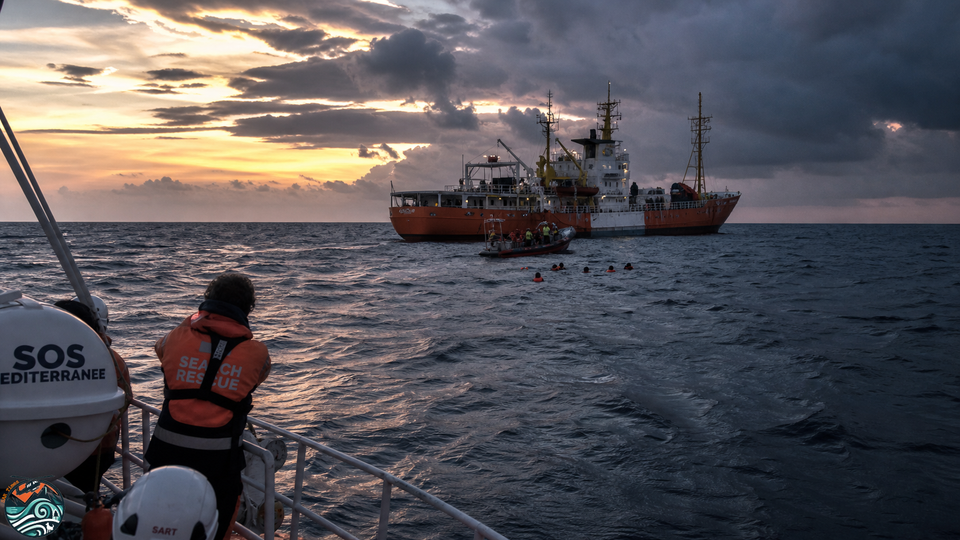
The central Mediterranean has the legal guidance. What it lacks is governments willing to act on it. Since Italy ended Mare Nostrum in 2014 and the European response shifted toward Frontex's Triton model, coastal and regional states have reduced direct SAR capacity, redirected maritime effort toward border control, and left non-governmental organizations to cover an operational gap they did not create. Those NGOs have not simply filled the void. They've documented it, litigated it, and kept people alive inside it for more than a decade.
That record deserves more than a footnote to a story about state failure. The Mediterranean is now the clearest modern case study in what NGOs can accomplish when states abandon their obligations, and what it costs to do that work under sustained institutional hostility.
The legal framework states are ignoring
Search and rescue at sea remains a core state obligation under three binding instruments. UNCLOS Article 98 requires every state to promote the establishment and maintenance of an adequate and effective SAR service and places a duty on flag-state ship masters to render assistance to any person found at sea in danger of being lost. SOLAS Chapter V, Regulation 33, extends that obligation to any master receiving distress information, regardless of the nationality or circumstances of those in distress. The 1979 SAR Convention operationalizes both by requiring states to establish rescue coordination centers, define SAR regions, and coordinate response within them.
In the central Mediterranean, that framework did not disappear. What changed was the willingness to carry it out at scale. The European Commission's own 2020 SAR recommendation explicitly acknowledged "Member States' strategic policy of disengagement from SAR operations in the central Mediterranean." That characterization came from the Commission itself, not from critics. When a policy body documents its members' strategic disengagement from a life-safety function, the intent is on the record.
ICAO's 2023 national audits found SAR compliance ranging from 81% at best, down to only 6% across member states. The Mediterranean is not an outlier in terms of the compliance gap. It is the most documented example of a failure mode that exists globally.
That legal architecture continues to be updated. On 20 May 2026, UNHCR, the International Maritime Organization, and the International Chamber of Shipping jointly released a revised Rescue at Sea Guide designed to help states, rescue coordination centers, and ship masters apply that existing framework to refugees and migrants in distress. The fact that three major international bodies felt compelled to jointly reissue it in 2026 is itself a commentary on how far operational practice has drifted from legal obligation.
The rescue gap was created by policy, not accident
Italy's Mare Nostrum operation, launched in October 2013, rescued more than 150,000 people in roughly one year at a cost of approximately 9 million euros per month. When it ended in October 2014, the follow-on mission, Frontex's Operation Triton, operated at roughly one-third the budget and with an explicitly different mandate. Triton focused on border protection rather than humanitarian rescue and operated closer to the Italian coast than to the zones where distress cases were concentrated. That operational reorientation is the hinge point of the entire story.
The human cost of that policy shift is recorded. In 2024, the International Organization for Migration's Missing Migrants Project documented 8,938 migrant deaths globally, the highest annual toll since tracking began in 2014. The central Mediterranean route alone recorded 1,842 dead or missing that year, set against a 58% drop in crossing attempts. The proportion of people dying relative to those attempting the crossing did not fall proportionally.
The House that NGOs built
Into the gap left by Triton stepped a non-state fleet that, by 2016 and 2017, was conducting tens of thousands of rescues annually in the central Mediterranean. MSF, Sea-Watch, ProActiva Open Arms, and Mediterranea Saving Humans, among others, established a continuous patrol presence in international waters where state assets had stopped operating. They developed multi-rescue voyage doctrine, at-sea survivor care protocols, and coordination procedures that no government was designing for that environment. That operational knowledge came from doing the work, repeatedly, in the most hostile administrative climate any maritime SAR organization has faced in the modern era.
MSF's Geo Barents alone rescued thousands of people across multiple deployments before the Italian government imposed four rounds of sanctions over two years. Sea-Watch vessels have sustained continuous operations in the central Mediterranean since 2015, amassing an operational record that spans more than a decade of sustained presence. ProActiva Open Arms has operated in the Mediterranean since 2015 and fought through criminal prosecution in Spanish and Italian courts to remain operational. Every one of those organizations has had assets seized, crews investigated, and vessels detained. Every one of them has returned to the water.
The court record is part of the win column, not just a log of obstruction survived. Italian courts have repeatedly confirmed that detention orders against NGO vessels were unlawful. In October 2025, an Italian court confirmed the unlawful detention of a Sea-Eye vessel. In March 2026, a judge in Chieti suspended enforcement of a blockade and fine against SOS Humanity's Humanity 1. These rulings are accumulating into a body of maritime administrative law that increasingly supports NGO operations and constrains the government's room to obstruct them. The NGOs are not just winning in the water. They're winning in court, steadily, against a government with significantly more resources and institutional authority.
Beyond the rescue counts, these organizations have built something durable: a documented operational and legal record demonstrating that non-state maritime SAR is viable, necessary, and legally protected under the conventions governments signed. That record has informed advocacy at the EU level, contributed to the policy analysis underlying the 2026 Rescue at Sea Guide revision, and changed the evidentiary baseline for how maritime SAR obligations are interpreted in European courts.
Why states are doing this
European governments have made a calculated decision that discouraging migration is worth more to them politically than fulfilling their SAR obligations. The European Commission put it in writing.
The most commonly cited justification is the pull-factor argument: that maintaining sustained rescue capacity encourages crossings by signaling that someone will pick migrants up. The argument remains politically durable even though migration flows are driven by conditions in origin countries: conflict, persecution, state collapse, and economic desperation. People crossing from Libya are not consulting NGO deployment schedules before they board a rubber dinghy. The crossing data does not support the pull-factor claim.
The deeper driver is electoral politics. The 2015 migration crisis produced a lasting political realignment across the EU. In Italy, Giorgia Meloni's Brothers of Italy won the 2022 election partly on a migration-restriction platform, and maintaining a visible state SAR posture in the central Mediterranean is politically untenable for governments whose base demands visible deterrence. Criminalizing NGOs serves a secondary function: it generates enforcement action that plays well domestically, even when courts keep striking it down.
Cost and burden-sharing failure added structural weight to the political pressure. Mare Nostrum cost the Italian government roughly 114 million euros over its year of operation. No other EU member state shared that burden meaningfully, and the EU's follow-on response had a fraction of the budget and a different mission. That abandonment calcified Italian resentment and gave successive Italian governments a legitimate grievance to weaponize.
The most troubling dimension is the deliberate outsourcing of interdiction to the Libyan Coast Guard. The EU, including Italy, has trained and equipped Libyan maritime forces to intercept crossings before they reach waters where European rescue obligations become politically inconvenient. Amnesty International, the UN Human Rights Council, and the EU Agency for Fundamental Rights have documented what follows those interceptions: return to Libyan detention facilities associated with militias, where abuses include torture, extortion, and sexual violence. This is a funded, trained, and coordinated policy choice made with full knowledge of where intercepted people end up.
NGOs filled the gap, then became the target
As NGO rescue groups made the state's absence visible by doing the work states had abandoned, governments moved from disengagement to obstruction. Between 2016 and 2019, six European states collectively initiated more than 40 administrative or criminal proceedings against SAR NGOs.
Italy's approach became the most systematic. Italy's Decree-Law 1/2023, the Piantedosi Decree, required rescue ships to proceed immediately to a designated port after a single rescue event, prohibiting the multi-rescue voyages that are standard operational practice for maritime SAR at scale. Italian authorities compounded this by assigning distant northern Italian ports, sometimes more than 600 nautical miles from the rescue zone, forcing vessels out of the operational area for days.
MSF's suspension of the Geo Barents in December 2024 captures the operational consequence most clearly. MSF reported four sanctions in two years, accumulating 160 days of vessel detention, and concluded that Italian laws and policies had made continued operations untenable. Lost patrol days are not recoverable through legal victories. Coverage gaps happen in real time.
In February 2026, Italian authorities detained SOS Humanity's Humanity 1 for 60 days in Trapani and imposed a 10,000 euro fine. The Meloni government simultaneously introduced legislation enabling a naval blockade that could bar NGO rescue vessels from Italian territorial waters for up to six months on broad security risk grounds. The Chieti court's subsequent suspension of enforcement is a meaningful win. It did not, however, return the lost operational time.
What this teaches other SAR systems
The Mediterranean is the clearest modern case study in what happens when a state's border enforcement interests conflict directly with its maritime SAR obligations, and border enforcement wins. That failure mode is transferable. It applies anywhere a government has signed conventions, defined SAR regions, and established RCCs without the political commitment to resource and use them.
What the NGO record in the Mediterranean adds to that picture is equally transferable. Non-state organizations operating with constrained budgets, no sovereign authority, and active legal hostility from the governments whose obligations they were covering have sustained a continuous SAR presence for more than a decade. They developed an operational doctrine under pressure. They litigated the legal boundaries of state interference and accumulated wins. They maintained organizational continuity through asset seizures, criminal investigations, and suspension of operations. That is a body of institutional knowledge that SAR organizations globally can study.
The 2026 revised UNHCR/IMO/ICS Rescue Guide is a practical tool, but it only helps where the operational and political will to apply it exists. Guidance issued by international bodies documents what action should look like. The gap between that documentation and actual practice is where people drown, and where NGOs have been working for over a decade.
For national SAR planners reviewing their own maritime posture, the test remains straightforward: if those in the water were recreational sailors, fishermen, or offshore workers instead of migrants, would the same delays, diversions, and legal friction be tolerated? If not, the gap is political will, not capability. The NGOs know this. They've been demonstrating it, one rescue at a time, since 2014.
References
Amnesty International. (2023, February). Italy: Weaponizing immigration law against NGO rescue vessels in the central Mediterranean(EUR 30/6407/2023). https://www.amnesty.org/en/wp-content/uploads/2023/02/EUR3064072023ENGLISH.pdf
Doctors Without Borders/Medecins Sans Frontieres. (2024, December 12). MSF pauses search and rescue operations in the Mediterranean indefinitely. https://www.doctorswithoutborders.org/latest/msf-pauses-search-and-rescue-operations-mediterranean-indefinitely
European Commission. (2020, September 23). Commission recommendation on cooperation among Member States concerning operations carried out by vessels owned or operated by private entities for the purpose of search and rescue activities (C(2020) 6468 final). European Union. https://www.statewatch.org/media/1362/eu-com-pact-recommendation-sar-23-9-20.pdf
European Union Agency for Fundamental Rights. (2025, June). Search and rescue operations in the Mediterranean and NGO ship activities — June 2025 update. Publications Office of the European Union. https://fra.europa.eu/en/publication/2025/june-2025-update-ngo-ships-sar-activities
International Maritime Organization. (1974). International Convention for the Safety of Life at Sea (SOLAS), Chapter V, Regulation 33. IMO. https://www.imo.org/en/about/conventions/pages/international-convention-for-the-safety-of-life-at-sea-(solas).aspx
International Maritime Organization. (1979). International Convention on maritime search and rescue. IMO. https://www.imo.org/en/about/conventions/pages/international-convention-on-maritime-search-and-rescue-(sar).aspx
International Organization for Migration. (2025). Missing migrants project: Global data 2024.IOM. https://missingmigrants.iom.int
Italian Navy (Marina Militare). (2014). Mare Nostrum operation. Ministry of Defence, Italy. https://www.marina.difesa.it/en/operations/pagine/marenostrum.aspx
Migration Policy Institute. (2020, October 8). The criminalization of search-and-rescue operations in the Mediterranean and rising deaths at sea.https://www.migrationpolicy.org/article/criminalization-rescue-operations-mediterranean-rising-deaths
SAR Times. (2025, May 23). Shifting SAR responsibility: NGOs vs. states in the Mediterranean.https://sartimes.com/2025/05/24/shifting-sar-responsibility-ngos-vs-states-in-the-mediterranean/
Sea-Eye. (2025, October 12). Italian court confirms unlawful detention. https://sea-eye.org/en/italian-court-confirms-unlawful-detention/
SOS Humanity. (2026, February 13). Italy detains rescue ship for 60 days and proposes 'sea blockade' bill. https://sos-humanity.org/en/press/italy-detains-rescue-ship-for-60-days-and-proposes-sea-blockade-bill-as-hundreds-are-missing-in-the-mediterranean/
SOS Humanity. (2026, March 26). Judge suspends blockade and fine for Humanity 1 in Ortona. https://sos-humanity.org/en/press/suspended-blockade-fine-h1/
UNHCR & IOM. (2025). Joint annual overview: Migrant and refugee movements through the central Mediterranean Sea in 2024.https://reliefweb.int/report/libya/unhcr-iom-joint-annual-overview-migrant-and-refugee-movements-through-central-mediterranean-sea-2024
UNHCR, IMO & ICS. (2026, May 20). Rescue at sea: A guide to principles and practice as applied to migrants and refugees (revised edition). https://www.imo.org/en/about/events/pages/revised-rescue-at-sea-guide-.aspx