SAR Times Weekly (09 Jul 2026)
Five Crew Missing in the Arabian Sea; AI Drone Logs Its First Field Rescue; Six Days in the California Wilderness

⚡️Weekly Highlights
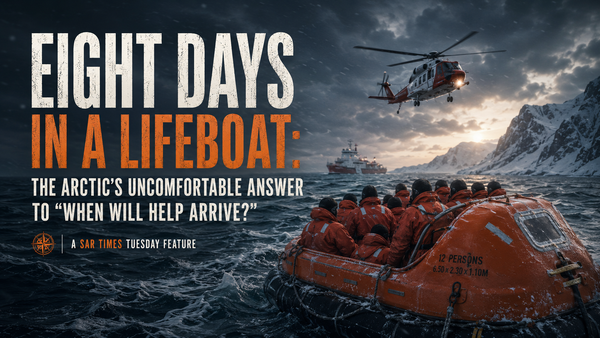
This week on the site: Eight Days in a Lifeboat: The Arctic's Uncomfortable Answer to "When Will Help Arrive?" is the week's deep-dive, examining what a real extended survival case reveals about the gap between response doctrine and outcome. The Monthly Regulatory Meetings for July 2026 has your complete reference for what's moving through IMO, ICAO, and related bodies this month. And, just for a little fun, I posted a small batch of SAR Times Phone Wallpapers, because, why not?
The biggest story of the week is the K2 Airways Boeing 737 that disappeared approximately 155 nautical miles west of Karachi on a flight from Sharjah, with the crew reporting navigational system issues before contact was lost. Pakistan's Navy and Civil Aviation Authority expanded the search under monsoon sea conditions across a large search box in the Arabian Sea. The New York Times reported yesterday (July 8) that wreckage had been located, but five crew members remain unaccounted for. Long-range maritime aviation SAR in high sea states, without a confirmed beacon hit and against monsoon weather, is about as difficult as this job gets. The operation is still running.
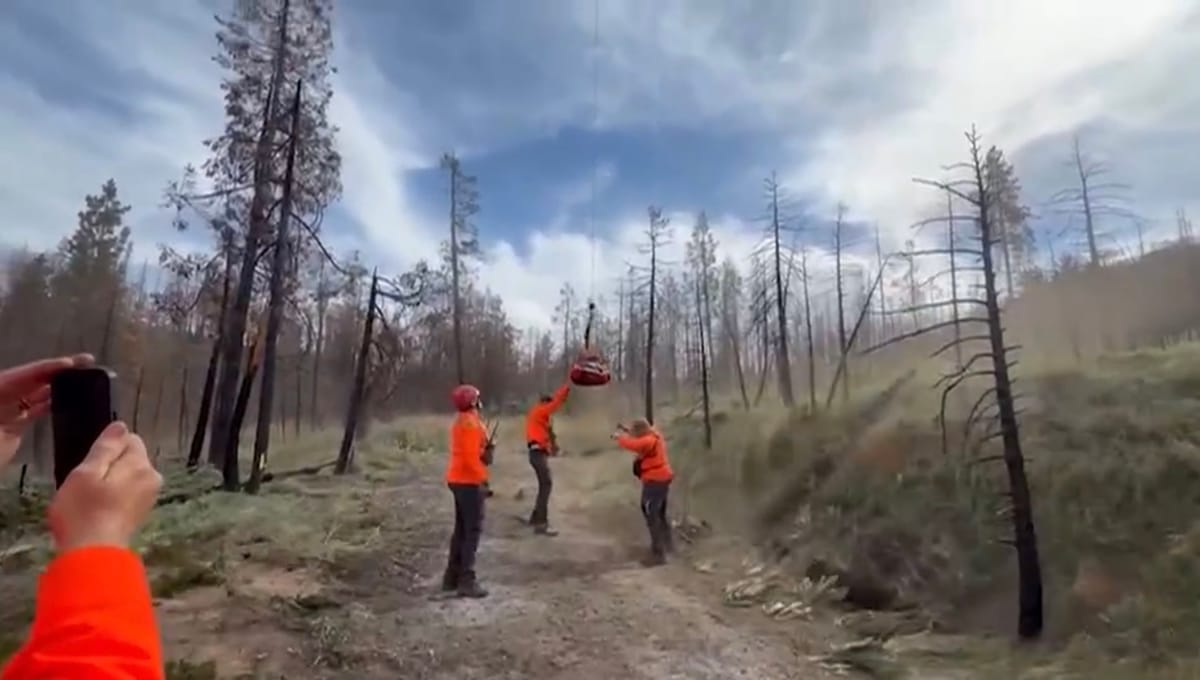
Domestically, the week produced one strong outcome and one fatality. A 70-year-old California man who went missing on a fishing trip was pulled from the wilderness alive on July 6th after six days without contact, a result that makes the case for sustained multi-day operations when early clues are thin. On the same day, Rocky Mountain National Park SAR responded to a death on Kiener's Route on Longs Peak's upper east face, closing the route overnight for recovery operations. Kiener's is catalogued as a non-technical route but crosses terrain that demands solid alpine skill in anything other than ideal conditions; the park responds to incidents there with some regularity.
🔴 Cases & Operations
Pakistan Navy Searches Arabian Sea for K2 Airways Boeing 737
A K2 Airways cargo 737 disappeared from radar west of Karachi during a flight from Sharjah after reporting navigational system problems, triggering an extended Pakistan Navy and Civil Aviation Authority search across rough monsoon seas. Wreckage was confirmed on July 8, but five crew members remain unaccounted for. The case illustrates the cost of large search areas combined with poor sea state: even when you find the debris field, crew recovery is its own operation.
California Man, 70, Rescued After Six Days in the Wilderness
A 70-year-old man who went missing after a fishing trip in a remote California wilderness area was rescued alive on July 6, six days after contact was lost. Extended wilderness searches often hinge on probability management and resource stamina more than initial clue quality - this one ran long and found its subject alive, which is the best argument for staying in the field past the point where some teams would stand down.
Coast Guard and Partners Search for Overdue Paddler Near San Pablo Bay
The Coast Guard and local partners activated a search for Tito Montances, 70, who departed home with his truck and canoe and failed to return; his vehicle was confirmed near Pinole. The response followed standard overdue-small-craft protocol: early reporting by family, vehicle found at a launch point, and multi-asset coordination across tidal estuary terrain. The case was open as of the July 8 Coast Guard press release.
Death on Kiener's Route, Rocky Mountain National Park
Rocky Mountain National Park SAR responded to a fatality on Kiener's Route on the upper east face of Longs Peak on July 6, closing the route overnight for recovery operations. Kiener's is listed as a non-technical route that crosses serious alpine terrain; it draws hikers into conditions that require mountaineering capability, and the park sees incidents there regularly. High-angle recovery at that elevation requires teams with both the technical gear and the conditioning to operate it safely.
AIR1 Helicopter Rescue at Turtlehead Peak, Red Rock Canyon
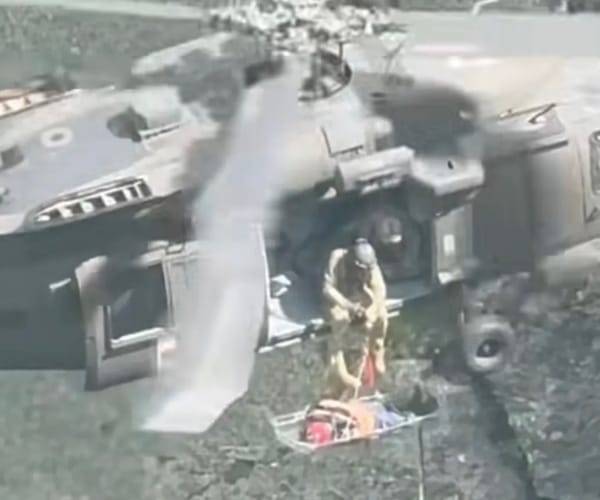
SAR personnel aboard the AIR1 helicopter responded to an incident near Turtlehead Peak in the Red Rock Canyon area on July 4, extracting a patient from steep desert terrain. Desert mountain SAR in July heat is a narrow window: delayed activation means a protracted ground approach in dangerous temperatures, making rotary-wing extraction the difference between a manageable rescue and a protracted recovery. Agencies that pre-position air assets for summer holiday weekends are planning for exactly this scenario.
Looking for a way to standardize your team's Search and Rescue certifications? Join the International Association of Search and Rescue Coordinators as an organization and have a voice in setting international SAR standards.
Individual Memberships are nearly here, too!
📡 Technology & Innovation
Fire and Rescue NSW AI Drone Locates Lost Hikers in Under Five Hours
On June 24, Fire and Rescue NSW used an AI-equipped drone to locate two hikers who had strayed off-trail in Kosciuszko National Park within five hours, marking the first operational deployment of the unit's onboard AI detection capability. The drone combined thermal imaging with AI-based human recognition, then used an integrated speaker to communicate with the hikers and a spotlight to guide ground teams to the position. The SAR commander's estimate that the technology could cut search durations by "several days" in comparable incidents is worth tracking - if that holds at scale, drone-AI integration changes how teams calculate initial resource deployment.
NASA, Microsoft, and EU Agencies Coordinate Satellite-AI Pipeline for Venezuela Earthquake Response
Following the June 24 Venezuela earthquakes, NASA, Microsoft, and EU agencies deployed a coordinated satellite-imagery and AI pipeline to map the hardest-hit zones and direct USAR resources. Microsoft's AI for Good lab used computer vision models to classify buildings by damage likelihood from satellite imagery, letting ground teams prioritize neighborhoods before entering. The approach builds on what was piloted in the 2023 Turkey-Syria response and is being treated as a deployable operational tool rather than an experimental one.
📋 Policy & Regulatory
Monthly Regulatory Meetings for July 2026
The July calendar at IMO, ICAO, and related bodies is collected in this month's SAR Times reference post. If you track what's moving through the international regulatory pipeline, this is your starting point.
🤔 Other News
USA-2 Urban Search and Rescue Returns from Venezuela
LA County Fire's USA-2 team arrived home in Pacoima on July 6 after an 11-day U.S. Department of State mission in Venezuela, closing out the overseas USAR response to the June 24 doublet earthquakes. The Venezuela operation pushed teams well past the standard survivor window while still running 24/7 operations - USA-2's return marks the end of that deployment cycle and the start of reconstitution before the next one.
🤓 And Now You Know
On the night of July 6, 1988, the Piper Alpha oil platform in the North Sea caught fire and exploded, killing 167 of 226 workers aboard in what remains the deadliest offshore oil disaster in history. The SAR response was complicated from the first minutes: burning oil across the surface prevented most lifeboats from launching, and the designated muster station was directly in the fire's path. Rescue craft from nearby standby vessels pulled survivors from the water while helicopters operated at the edge of a flame-lit exclusion zone. The disaster drove a comprehensive review of offshore emergency response across the North Sea industry, producing changes in platform evacuation systems, standby vessel positioning, and survival craft design that remain the baseline for offshore SAR planning today. For anyone working in or around offshore energy SAR, Piper Alpha is foundational reading.
Have a story or some information you'd like posted in the SAR Times Weekly Newsletter? You can reach me via email, anytime.